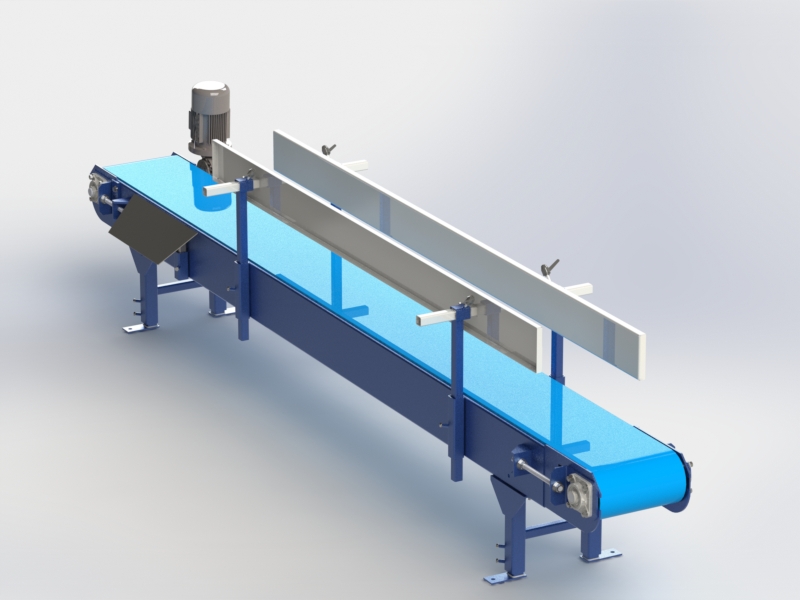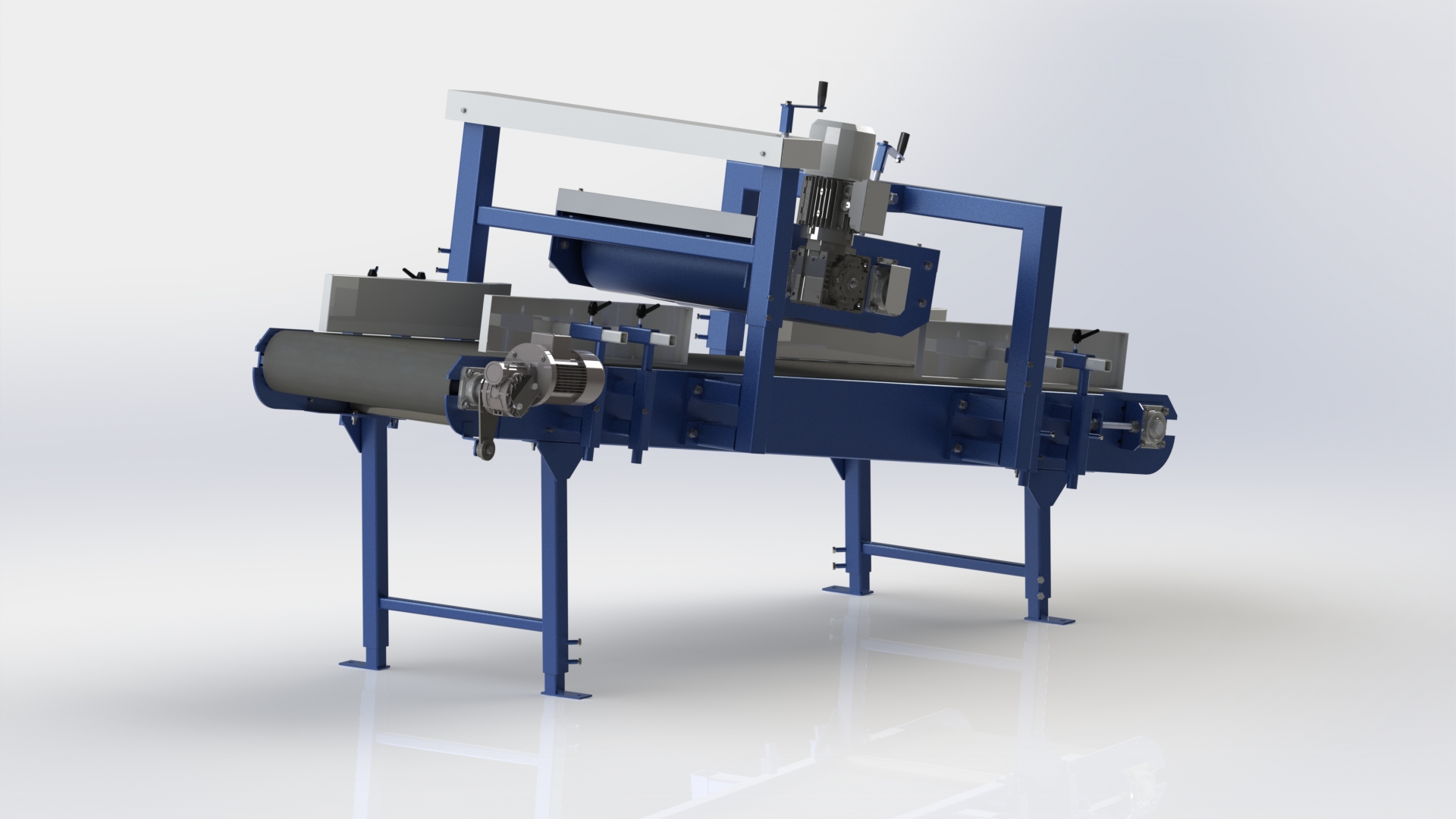
Sack Conveyor SystemsMorray Sack Conveyors are tailored to length, width and control configuration to suit the requirements of any material transport system- from simple stitching lines to fully automated production and packing facilities.
All Sack Conveyors are available in rubber belt, Intralox® (right), stainless steel slat band and plastic slat band to meet the needs of your product.
| Heavyweight steel (or stainless steel) construction with sealed bearing units. | |
| Torque direct mount or chain drive motor/gearbox unit | |
| Complete with all electrical control gear | |
| Standard 2, 3, 4 and 5 meter lengths, custom lengths on request | |
| Complete system design service. |
| Special speed versions via chain drive or continuously variable speed motor/gearbox units. | |
| Custom belt profiles, such as troughed belts. | |
| Electrical and manual height adjusting units | |
| Add-on PLC based accumulating and indexing system. | |
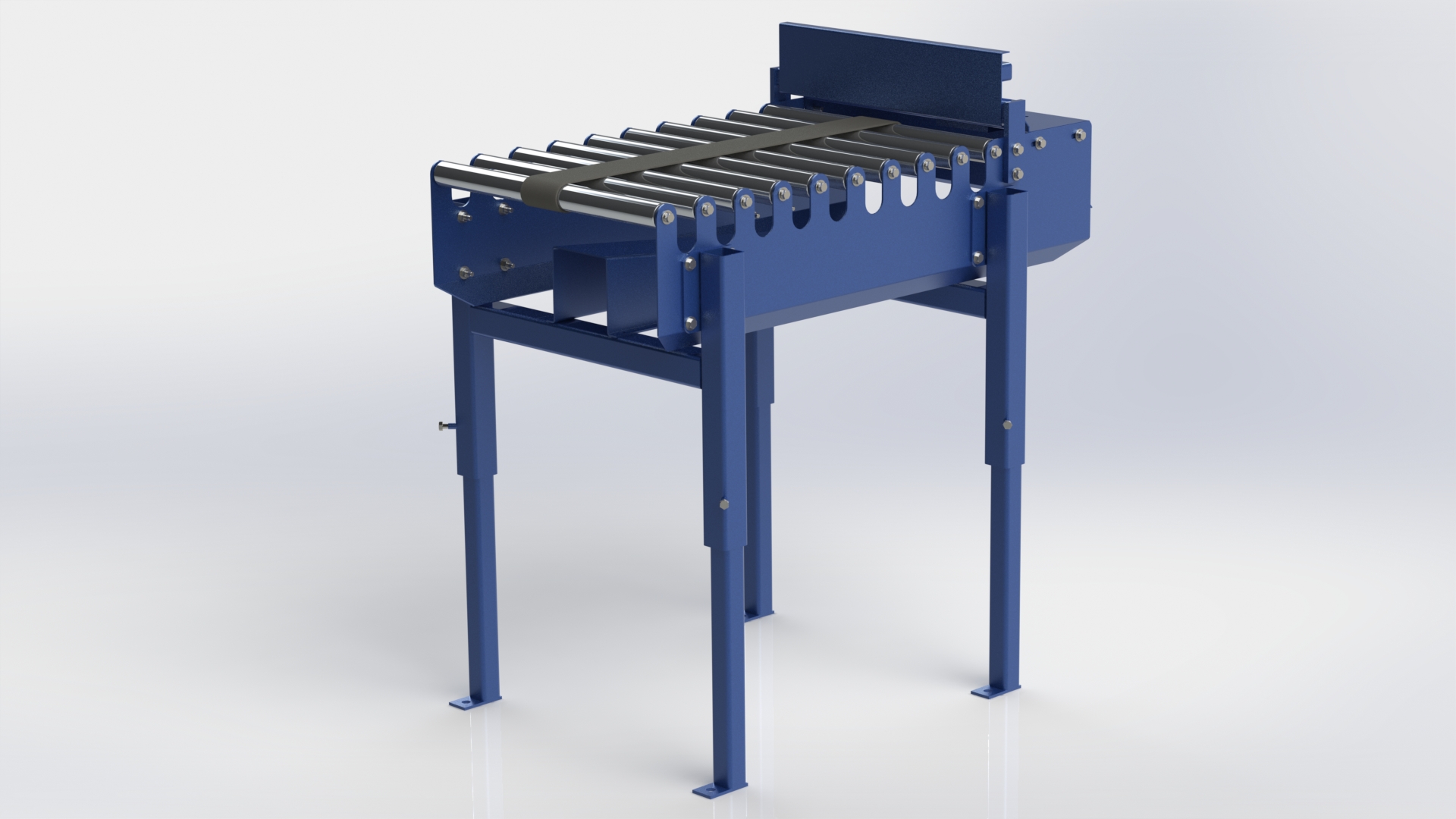
| Powered and manual roller tracks | |
| 1.2 meter extensions |
Download Sack Conveying Data Sheet
Sack Turners |
|
![]() |
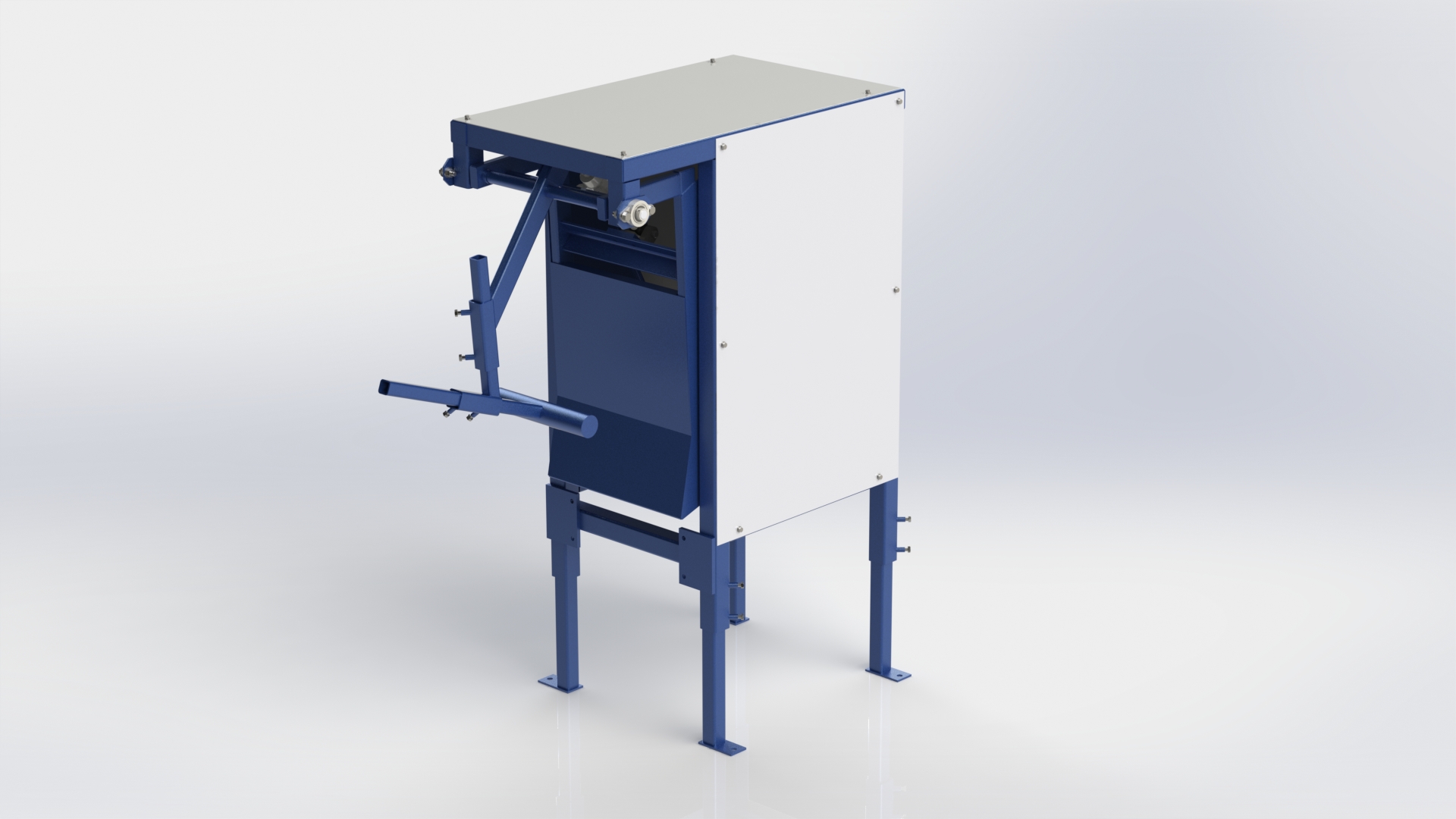
Morray inline bag turners have a simple, rugged design allowing various sized bags to be turned to a horizontal position for removal or entry to a bag press. Key Benefits
Optional Extras
|
Check Weighing |
|
![]() |
Morray supplied check weighing solutions are high speed (up to 60 units per minute) and effective units, rich in advanced features such as RS Serial communication and printed reports, yet are simple by design, fully self-contained with a small operational footprint so can be integrated into existing systems effortlessly Optional Extras
|
Bag Press |
|
![]() |
Morray Bag Presses, made to customer specifications or in standard roller of belt configuration. Key Benefits
|
Metal Detector |
|
![]() |
Morray Metal Detecting conveyors are a highly effective and reliable solution for detection of ferrous contaminants in bags of product down to the smallest piece of swarf. They are able to work in close proximity to other metal structures and equipment without interference thus negating the need for a 'metal free zone'.
|